Fashion Branding and Promotion
Through Inclusive Design
Fashion Branding and Promotion
Design Statement: As a designer, I want my work to add meaning beyond aesthetics. This project challenged me to look beyond traditional fashion design and consider who is often excluded from the retail experience. That reflection led me to focus on accessibility and the experiences of visually impaired users. Through Navvi, I explored how design can become a tool for confidence, independence, and inclusion. The process of research, empathy-building, testing, and problem-solving helped me understand the importance of designing with people, rather than only for them. This project has shaped my identity as a designer committed to thoughtful, functional, and human-centered design that responds to real needs and makes everyday experiences more inclusive.
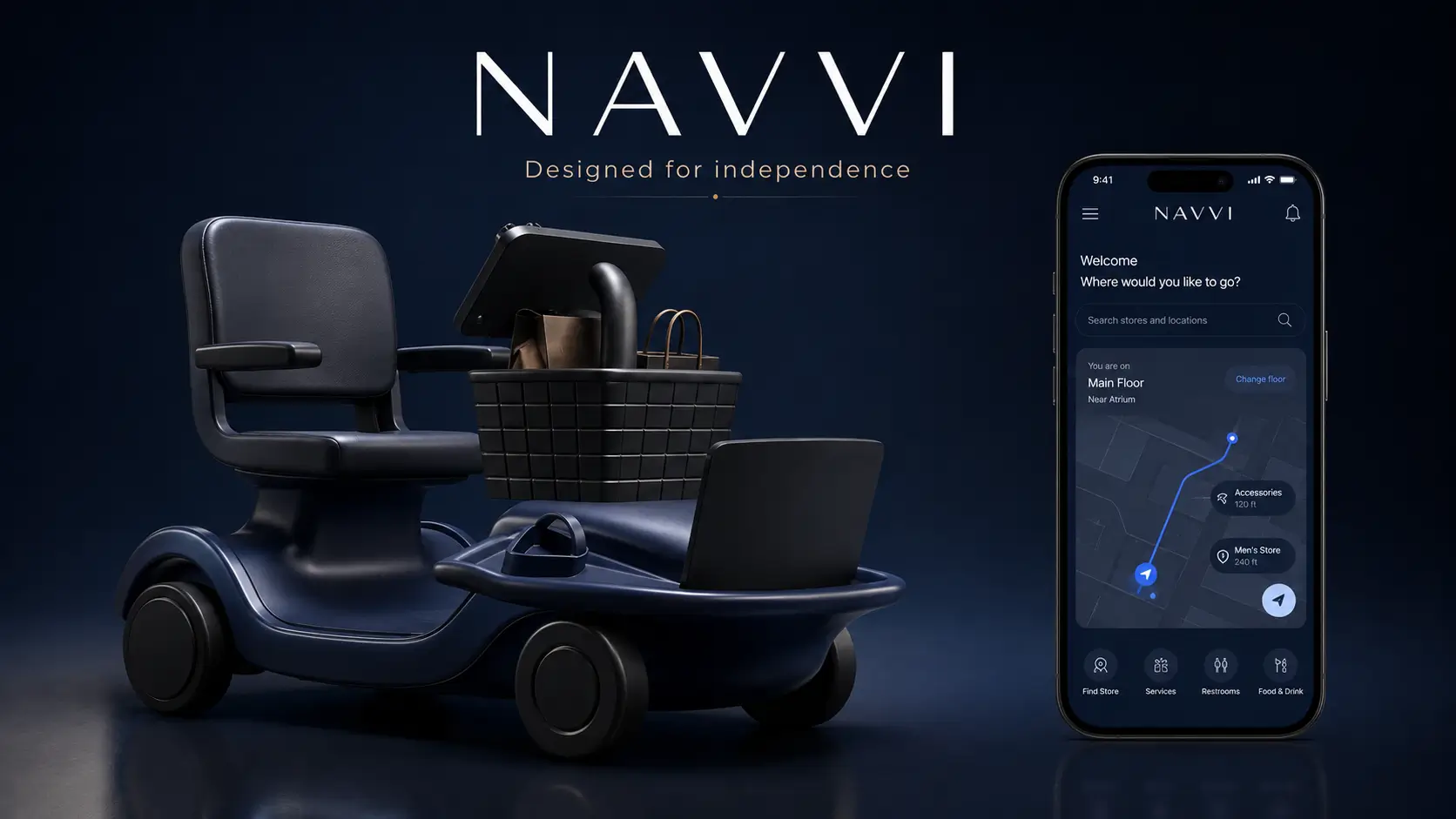
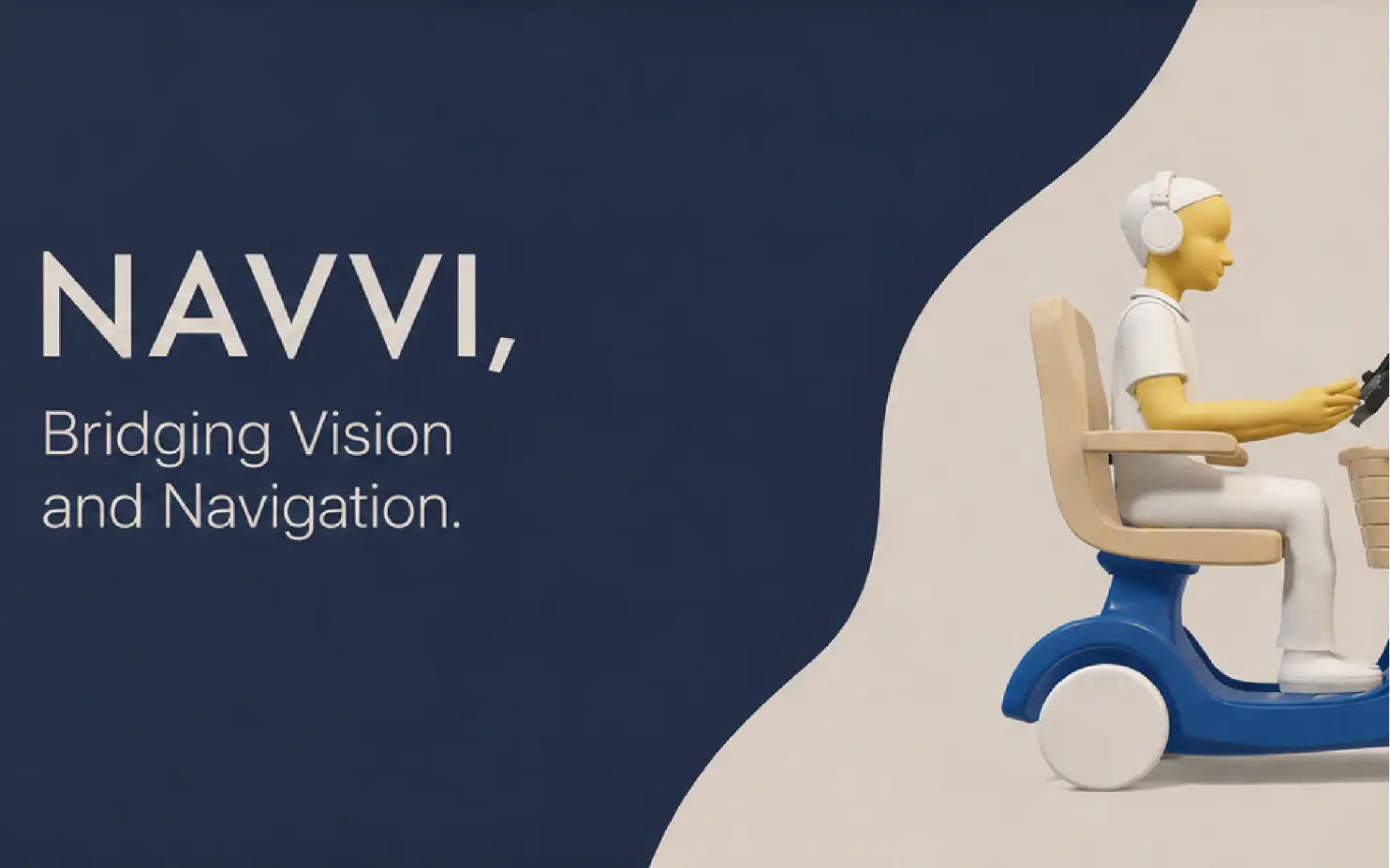
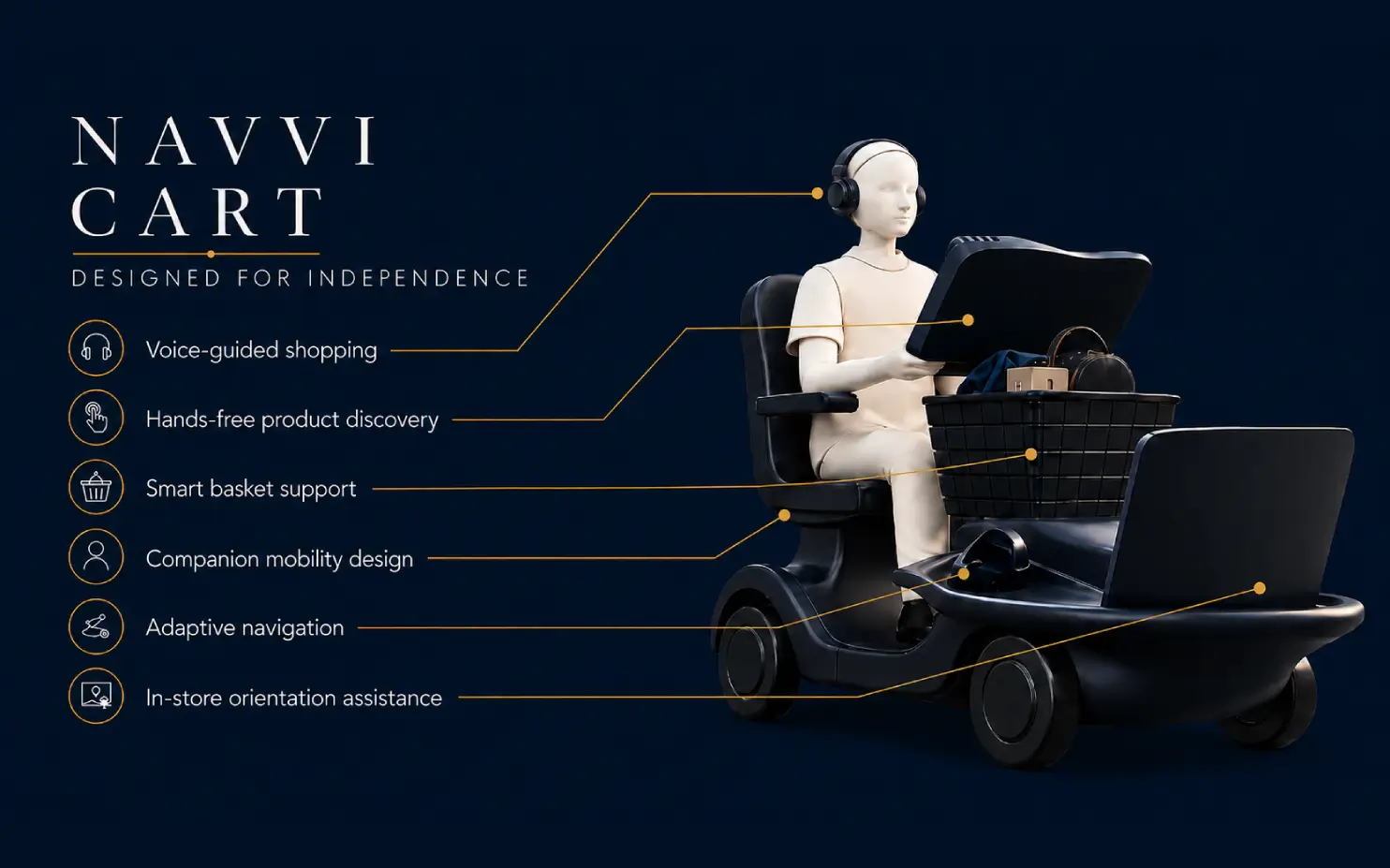
Project Statement: Fashion shopping can be enjoyable, expressive, and empowering. However, for visually impaired individuals, the same experience can often become stressful, dependent, and inaccessible. Challenges such as navigating retail spaces, identifying products, comparing options, and making style decisions can require constant external assistance, limiting independence, and reducing emotional comfort. Navvi responds to this gap through inclusive design, multisensory guidance, intelligent navigation, and human-centered service thinking. It is an AI-powered assistive smart cart paired with a personalized application, designed to guide users through voice cues, scent markers, adaptive routing, and optional human support. By combining technology with empathy, Navvi aims to make fashion retail more accessible and dignified. It supports independent movement, confident decision-making, and a more inclusive shopping experience where visually impaired users can explore, choose, and engage with fashion on their own terms.